Mark D. Wiese
Director, Moon Base Transportation Office, Moon Base Program, NASA
Space Settlement Summit: Among the Top Space Events of 2026 - Part of UCF Space Week 2026 with The Economist

BACK BY DEMAND: MORE TICKETS ADDED!
Connecting innovators to lead the next space economic boom.
You are invited to be part of a collaborative force actively laying the foundation for a sustainable future on the Moon and beyond. The aim of Space Settlement Summit 2026 is to bridge the gap between lunar exploration and commercial reality by tackling the structural frameworks of the cislunar economy.
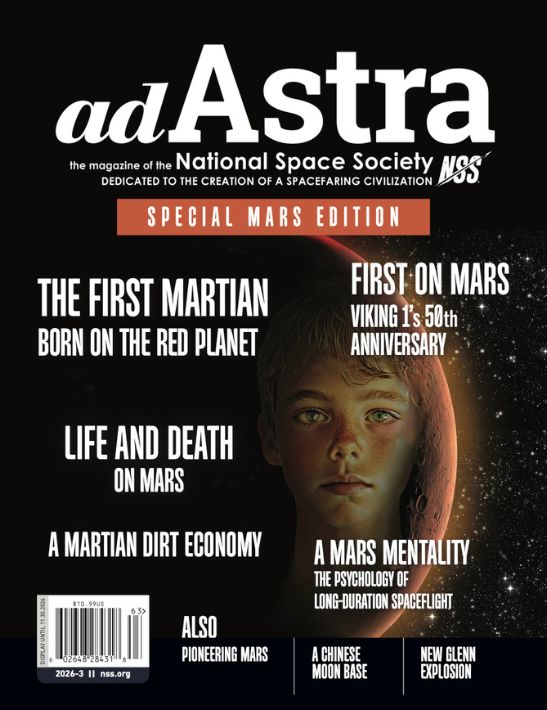
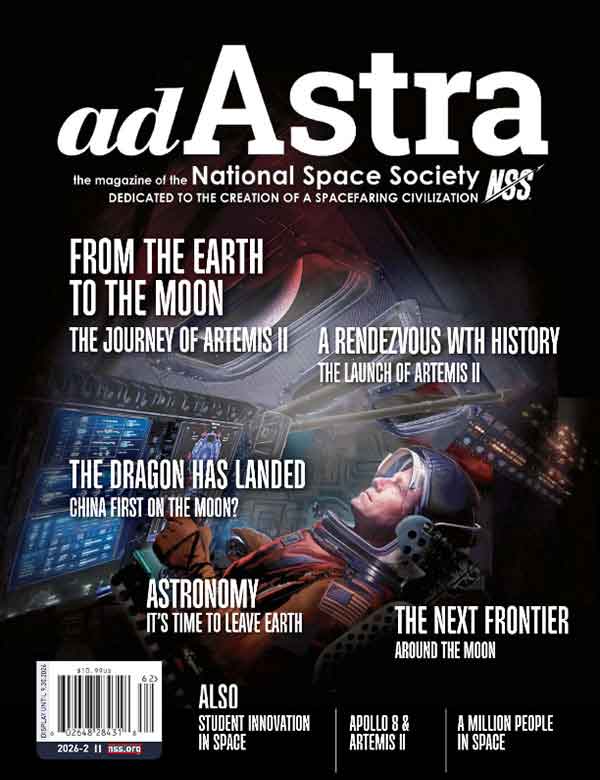
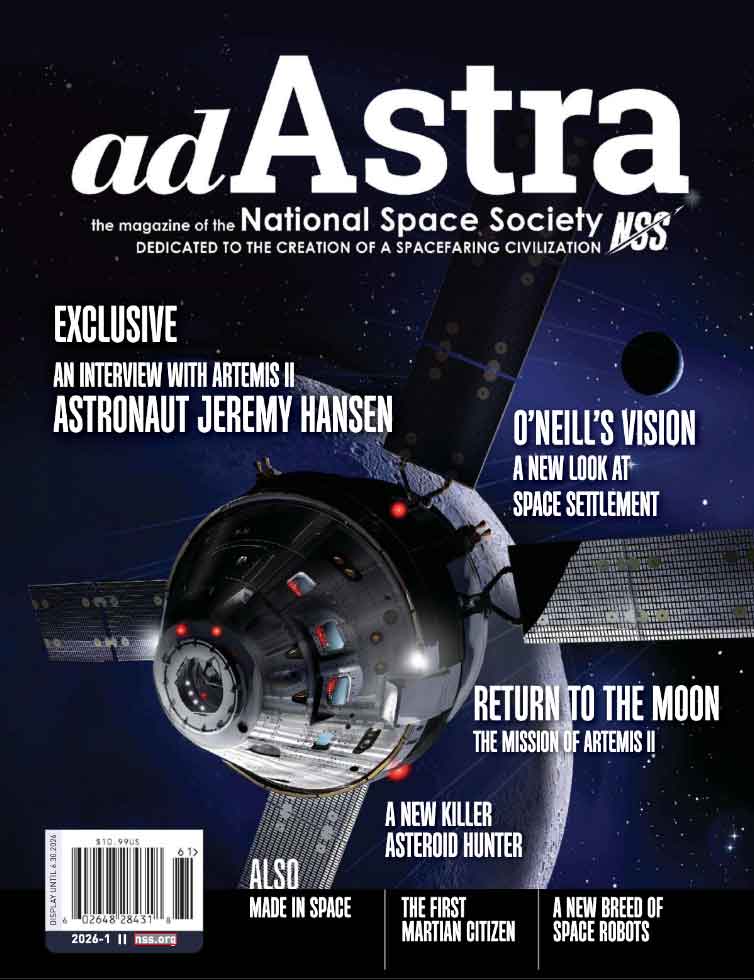
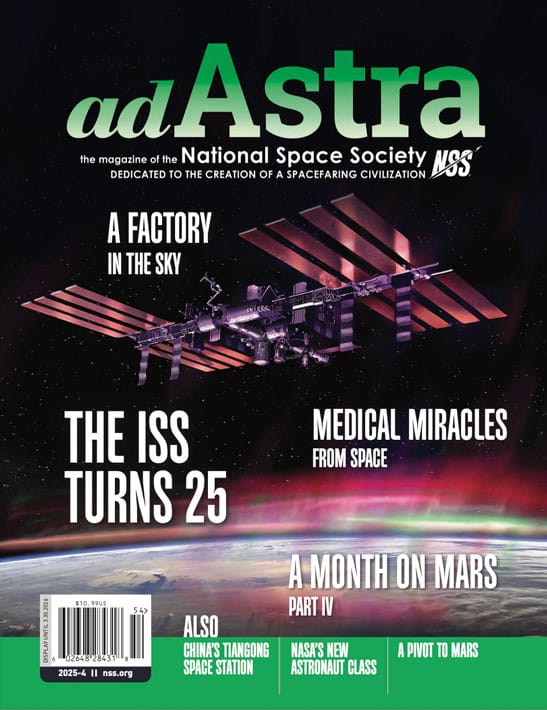
The Space Settlement Summit brings together leading experts, visionaries, and decision-makers to formulate actionable strategies for the future of human expansion into space. Results of the workshops will produce a set of space settlement summit position papers and as a feature article in Ad Astra Magazine. Results will then be used as outreach to policy makers, industry leaders, and investors.
The Orbital Space Settlement Design workshop will result in a draft recommendation titled "Recommended Preferred Use-Case for the first Earth-Moon Orbital Settlement," which will, in its final form, appear as a paper in the NSS Space Settlement Journal. The Orbital Space Settlement Design workshop will also output an updated list of questions that will be used to guide the Orbiting Space Settlement Project over the next five years, and will be published on the OSSD project page.
Through these disseminated outcomes, the summit aims to directly inform policy decisions, stimulate public interest, and catalyze near-term investments in off-world settlement.
Our workshops will dive straight into the vital logistics of living and working on the Moon, the security of space economic interests, governance, and the deployment of next-generation power grids and orbital habitats. Attendees are invited to join their selected breakout workshops.
With NASA returning to the Moon via the Artemis program--this time with plans to stay--now's the time to iron out how we plan to move mass efficiently around the solar system to support these and other human space settlement activities. We'll focus on the supply chains, resource management, and orbital transit networks required to sustain human presence across cislunar and interplanetary space. In this collaborative workshop, we will map out the critical infrastructure, risks, and technical gaps preventing us from bridging these three celestial bodies. Through rapid brainstorming sessions and structured group debates, we will analyze current capabilities and future friction points. Ultimately, we will co-create and deliver to the assembled Space Settlement Summit three core architectural findings and three high-impact recommendations for immediate action by 2028.
With clear direction and budgetary support from US leadership, a Moon Base will be built in the near future. From tasks, environment, food, to human experiences, an unprecedented level of development is needed in a short period of time. Speakers will share the current status of technology, understanding human realities in space, and cover a host of other topics related to a successful and thriving Moon Base. The workshop will work towards prioritizing what needs research, development, and what is ready to go and needs to be scaled now, to enable the US to successfully deploy and populate a Moon Base soon.
As a participant in the 2026 Space Settlement Summit, you are invited to engage in a 2-part workshop that is part of the Orbital Space Settlement Design Project. Based on terms of reference adopted by the NSS in March 2026, the end goal of this five year effort is a complete engineering design for the first rotating space settlement in cislunar space. The focus of the workshop at the 2026 Space Settlement Summit will be twofold. The first is to take an initial look at the use case for a rotating orbital space settlement at some location in the Earth-Moon system. The second is the review, expansion, explication, and explanation of the questions that must be answered to complete the engineering design of an orbital space settlement. Additionally, the dependencies between the questions will be discussed. The workshop will be led by the RSSD Project Leads: Rick Jenet, Dale Skran, and Bryce Meyer. The questions will be divided into three groups to allow persons with differing interests and skills to participate in the section they find the most interesting. The three sessions are high level requirements, agricultural/biological, and physical/construction. Find out more >
"Scotty we need more power!" Captain Kirk famously proclaimed. His words continue to be true. Speakers will inform participants of the current state of power generation, storage, and distribution technologies of space as well as discussing exciting new developments and the work of private sector organizations in enabling scaled power in space and on the Moon. Participants in the workshop will develop a prioritization and evaluation of technologies and capabilities to directly support the Moon Base, with focus on the near now, but eyes to the future of scaled activities and presence across the entire surface of the Moon.
Today, the US Navy, in coordination with allies around the world, provides security and support to global sea-based logistics networks. In eras past, national navies as well as semi-private organizations such as the East India Companies, have provided similar security and support, suppressed bad behavior such as piracy and smuggling, while supporting global trade. As the global economy expands into space, so too does supply chain and logistics. Therefore, the need to secure the activity grows. Currently, neither the law, nor the capability is complete, and the needs are poorly defined. How will trade be secured for the LEO and Cislunar economies? Speakers will explore current paradigms and the workshop will develop a set of needs and possible scenarios that must be addressed.
The security of nations has always been convolved with their economies and economics is both influenced by and a tool of national security. Speakers in this workshop will share frameworks for understanding how the emerging space economy interacts with national economics and security and the workshop will develop a model for how LEO and Cislunar economies will extend and interact with national security and economics as we currently know them.
The rockets are being built. Companies are planning lunar mines, power systems, communications networks and settlements. Governments are forming competing coalitions. Surely a treaty written in 1967 cannot tell today’s entrepreneurs how to build a lunar economy. Or can it?
This interactive workshop will put the Outer Space Treaty to work. Participants will confront a fast-moving lunar scenario involving rival settlements, competing resource operations, safety zones, damaged infrastructure and interference with historic and scientific sites. Does the Treaty protect private enterprise or constrain it? Can companies secure investment without traditional property rights? Who gets priority when two operators want the same location? Can contracts, insurance, technical standards and private arbitration fill the gaps, or will governments inevitably step in?
This will not be a lecture about what lawyers think the Treaty means. Participants will determine what the Treaty must mean if people are actually going to live, work and do business on the Moon, then identify the practical steps needed to build rules that facilitate investment, commercial growth and human settlement without importing unnecessary terrestrial bureaucracy. The precedents established on the Moon will not remain there. They will influence how humanity approaches resources, property, commerce and settlement on Mars, asteroids and throughout the solar system. You may not care about the Outer Space Treaty. But the future space economy will be built within the legal framework it created.
The Moon is, to many, the obvious next logical destination for human space endeavors beyond low Earth orbit. To NASA and its Artemis partners, the Moon Base is now the new multi-decadal project all are working together to realize. To scientists, the Earth’s natural satellite is a companion world holding definitive clues to the origin and evolution of the Earth-Moon system, and possibly of many other planetary systems as well. To prospectors—at least the optimistic ones—the Moon offers the promise of a new Eldorado, rich enough to feed a “Gold Rush” predicated on an economically viable in-situ resource utilization (ISRU). To space entrepreneurs, the Moon is where the next big business venture and commercial opportunities lie, and where a wide range of new technologies will be demonstrated and tested. To geopolitical strategists and the military, the Moon is the new influence theater and warfare domain. To futurists, the Moon is where we become a multiplanet species.
Given the diversity of stakeholders and perspectives, can a common purpose and set of specific objectives be articulated regarding why we need to focus on the Moon, and why it should be done now? Led by Dr Pascal Lee, director of the Mars Institute, senior planetary scientist at the SETI Institute, and VP for Planetary Development at the NSS, this workshop will collect, synthesize, and if possible, unify all the good reasons we should aim for the Moon, establish a base there, and why we should do it now. This workshop will also be open to considering potential arguments for why we maybe should not, or should not now. The goal of the workshop is to collect input from all participants to help ensure our current national and international plans to return to the Moon and establish a base there are solidly founded, crisply articulated, realistically planned, and optimally implemented.
Voice and Thought Leaders Inspiring the Summit Stage
Director, Moon Base Transportation Office, Moon Base Program, NASA
President and CEO, USRA
Editor-in-Chief, Ad Astra Magazine | Co-Host, This Week in Space | Author, Journalist, Filmmaker
Space Strategist and Program Leader
Co-founder and CEO, Max Space
Special Representative to the Chairman and CEO, Voyager Technologies
President and COO, Blackstar Orbital Technologies Corporation
Associate Provost for Space, University of Central Florida
Chief Marketing Officer, Star Catcher
Space Architect and Industrial Designer
Visionaries in Space Exploration, Science, Policy, and Innovation Leading the 2026 Workshops
Senior Fellow in Defense Studies, American Foreign Policy Council
Executive Director, Center for Air and Space Law, University of Mississippi
Professor of Practice, Space Electrical/Power, University of Central Florida
Founder and Executive Director, Expanding Frontiers
Co-founder and Chairman, Mars Institute
NSS Space Ambassador, Space Farms, St. Louis Space Frontier
Chief Operating Officer, Andromeda Space Corporation
Vice President of Partnerships, Chief Scientist & Strategic Counsel, Max Space
COO/SVP, National Space Society
Join us in Orlando for UCF Space Week, October 25th–30th, 2026 — a six-day series of events celebrating innovation in space science, exploration, and policy. Kicking off with the Space Settlement Summit on October 25th & 26th, the week continues with keynotes, tech demos, student showcases, and more. Don’t miss this unique convergence of visionaries, researchers, and future leaders shaping our multi-planetary future.


 Live & In Person • Tickets Available Now
Kickoff 7:30 PM | TV: ESPN
Live & In Person • Tickets Available Now
Kickoff 7:30 PM | TV: ESPN
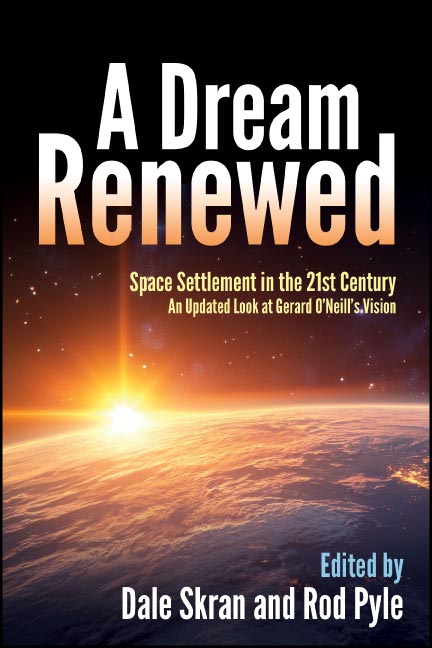
Recently, more than fifty academics, engineers, NASA officials, and high-level leaders in the space exploration industry worked in tandem to perform a careful review of plans for major space settlement.
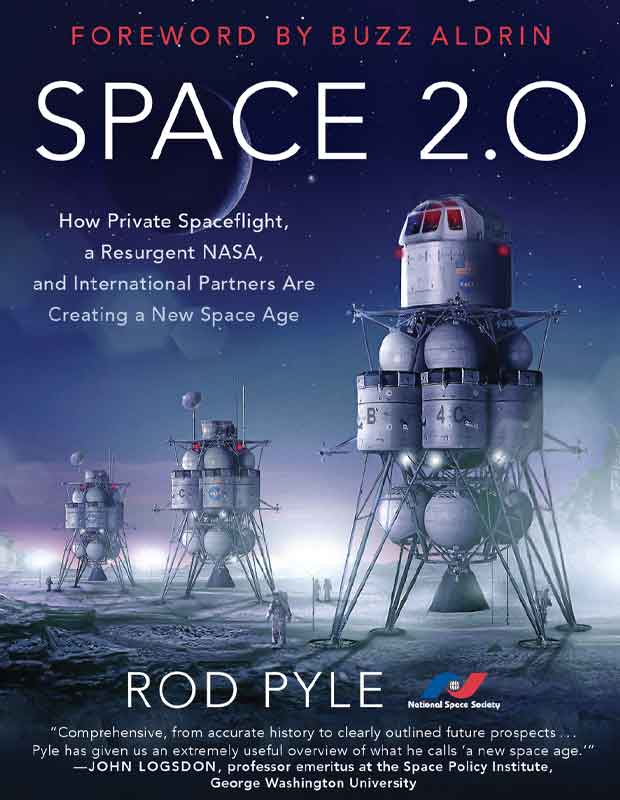
A Dream Renewed: Space Settlement in the 21st Century dives deep into previously overlooked and lightly addressed subject areas and introduces many new and unique approaches to living off-Earth. This book is an exclusive report of that work and is the first comprehensive update since Gerard K. O’Neill’s work in the 1970s.
Join us on Sunday, October 25th, during the Summit reception for the official launch of A Dream Renewed, presented by editors Dale Skran and Rod Pyle. Copies will be available for purchase throughout the Space Settlement Summit, and both editors will be on hand to sign copies.

The National Space Society (NSS) is a nonprofit organization dedicated to the creation of a spacefaring civilization. Our vision is a future where people live and work in thriving communities beyond the Earth. NSS is committed to a space settlement agenda that will transform space from a frontier to a robustly inhabited and developed domain.
To empower humanity's future in space. We advocate for the exploration and settlement of space through policy, advocacy, outreach, and education. We inspire and educate the general public, support cutting-edge research, and promote the unifying power of space for the betterment of humanity. Our goal is a future where the limitless resources of space benefit all of humanity, fueling a new era of prosperity, opportunity, and discovery.

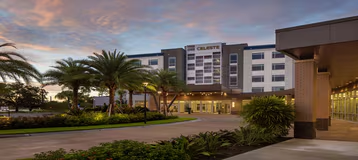
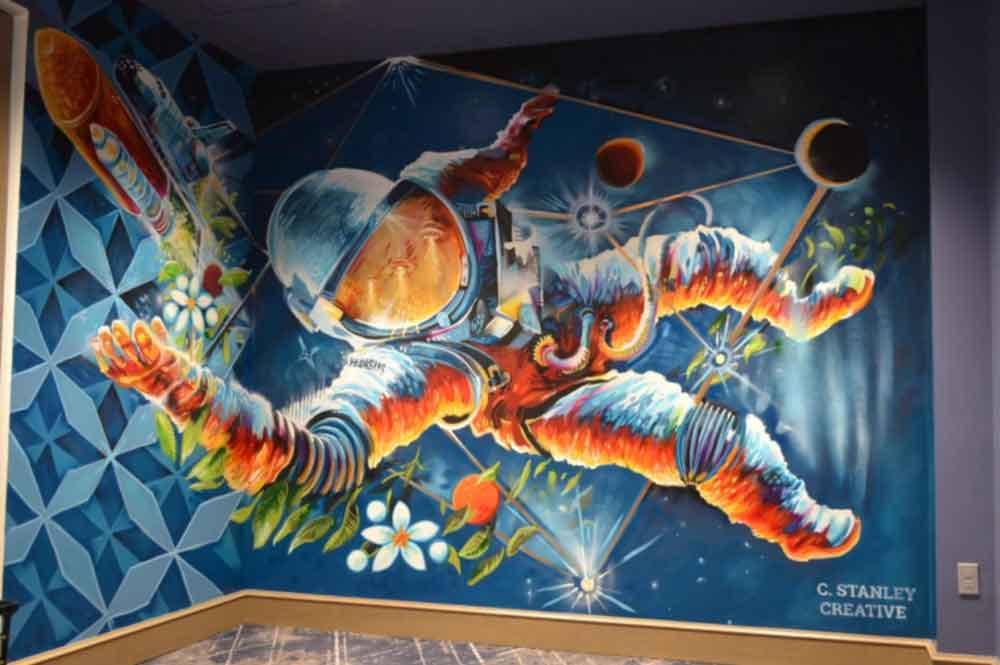

The Celeste Hotel is our main summit hotel and the location of the Sunday workshops, evening receptions, and book launch. Just minutes from the University of Central Florida campus, it's an ideal home base for your summit experience. Our room block offered a group rate of $189.00 plus tax from October 20th to October 31st.
The group rate deadline has passed, and the room block may be sold out for some dates. You're welcome to use the link below to check availability. If your dates are no longer available, please see our additional hotel, DoubleTree by Hilton option.





Continue the momentum built at the Space Settlement Summit:

International Space Development Conference
May 27 - 30, 2027
Sheraton Gateway Los Angeles Hotel
Los Angeles, California

Contact Aggie Kobrin at the National Space Society for more information
949-836-8464
Be the first to know about upcoming National Space Society events, including the Space Settlement Summit, UCF Space Week highlights, and other opportunities to connect with space industry leaders and advocates.

Copyright 2026 | National Space Society, all rights reserved.